
From their humble beginnings in the ancient civilizations of Central Asia to becoming a symbol of Dutch heritage, tulips have traveled a long and captivating journey. In this blog post, we unravel the story behind the arrival of tulips in the Netherlands and their subsequent rise to prominence.
Origins in Ancient Asia
The story of tulips can be traced back to ancient times when they first flourished in the regions of Central Asia, specifically in present-day Turkey, Iran, and Kazakhstan. These vibrant flowers captured the imagination of Persian and Turkish cultures, becoming deeply rooted in their art, literature, and symbolism.
Role of Ottoman Empire & Sultan Suleyman Khan
Suleiman the Magnificent, during his reign in the Ottoman Empire, is believed to have acquired tulip bulbs from the regions under Ottoman control, particularly in Central Asia and Persia (present-day Iran) during the 16th century. The tulip was already a beloved flower in these regions, deeply embedded in their cultural traditions. Through trade and diplomatic connections, it is likely that tulip bulbs were obtained from these areas and brought to the Ottoman Empire, where they were cultivated and appreciated in the gardens of the Ottoman court.
How Did Tulips reach Netherlands?

In Istanbul, the capital of the Ottoman Empire, an ambassador from the Holy Roman Empire named Ogier Ghiselin de Busbecq encountered the tulips during his diplomatic missions. Captivated by their allure, he decided to send some bulbs back to his friend, Carolus Clusius, a renowned botanist and horticulturist in Leiden, the Netherlands.
As the tulips bloomed, their unique beauty attracted attention from the local community and sparked curiosity among horticulturalists and plant enthusiasts.
Word of these fascinating flowers spread like wildfire, and soon the Dutch began to experiment with cultivating tulips on a larger scale. Tulip bulbs were brought to the attention of the Dutch elite, who, with their love for luxury and rarity, saw great potential in these exotic flowers.
More than the Netherlands favorable climate, its rich, well-drained soil, provided the perfect environment for tulips to thrive. As Dutch growers honed their cultivation techniques, the tulip’s popularity grew rapidly. Soon, tulip fields adorned the countryside, painting the landscape with a riot of colors every spring.
Tulip Mania
As the demand for tulips increased, so did their value and this phenomenon “Tulip Mania” reached its peak in the 1630s when the tulip market experienced a speculative bubble. The demand for tulip bulbs soared, and prices skyrocketed, creating a speculative bubble.

The Crash
By the mid of 17th century the tulip markets crashed and there were several factors contributed to the crash such as
- Lack of regulation resulting in an environment prone to excessive speculation and unrealistic valuations.
- Market saturation and overproduction.
- Confidence erosion of the buyers and investors.
- Government intervention by nullifying outstanding tulip contracts, which caused further panic and undermined trust in the tulip trade.
The combination of these factors led to a rapid and dramatic collapse of the tulip market. Many investors faced significant financial losses, and the speculative bubble burst, causing a subsequent decline in the popularity and value of tulips.
How Tulips Saved Lives?
In the fall of 1944, the Allies lost the Battle of Arnheim to the Nazis, leading to a blockade of the Netherlands and a severe shortage of coal and food supplies. This resulted in the “Hongerwinter” famine, causing an estimated 22,000 deaths. To combat the food shortage, Dutch tulip growers distributed their stored bulbs as a source of nutrition. Despite their taste, the tulip bulbs proved to be a life-saving food option during World War II.
Still a Dutch Cultural Icon
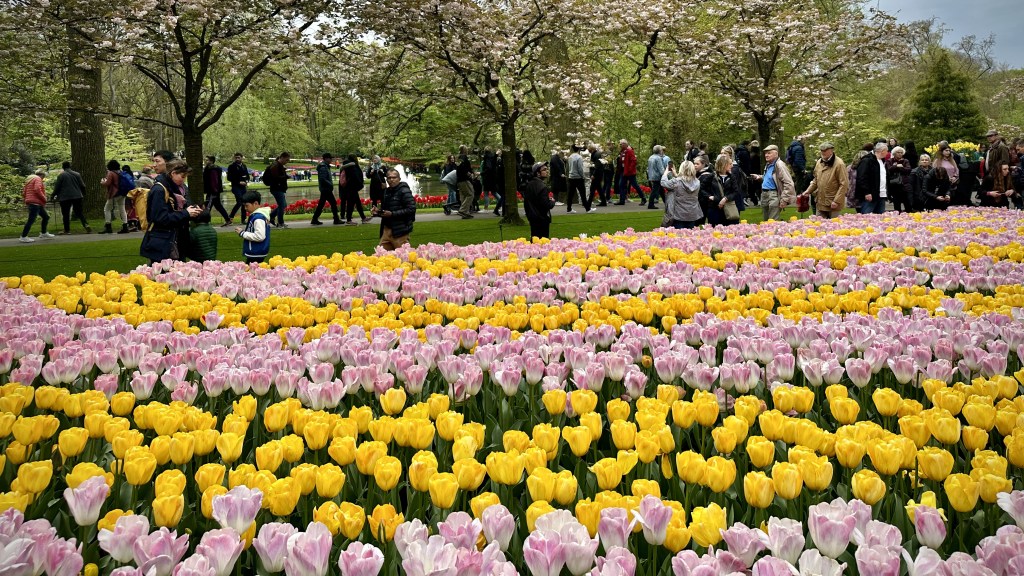
Despite the crash, tulips remained beloved flowers in Dutch culture, and the tulip industry in the Netherlands continued to thrive on a more stable and sustainable basis.
The journey of tulips from Asia to the Netherlands is a remarkable saga of discovery, cultural exchange, and horticultural innovation. These enchanting flowers, once cherished in ancient Asian civilizations, found a new home in the Netherlands and became a vibrant symbol of Dutch heritage. As tulips continue to bloom across the Dutch landscapes, they remind us of the enduring power of nature’s beauty and the interwoven tapestry of human connections that span continents and centuries.
 Let's See Places
Leave a comment